Particle Accelerator Fragment
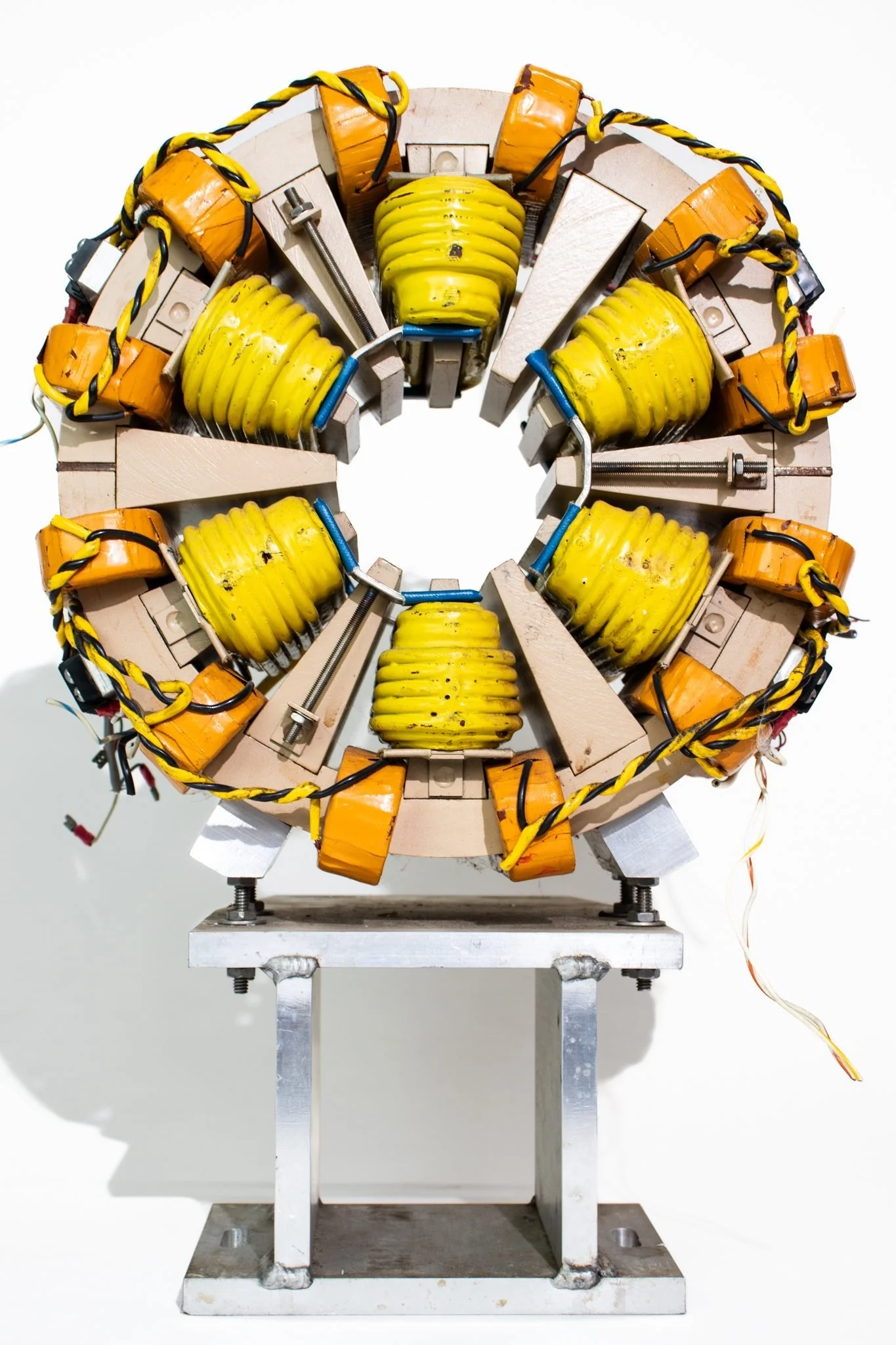
This is a section of the cooling coils, seen here in yellow, of the beam-steering magnets of the Aladdin electron storage ring, a synchrotron particle accelerator.
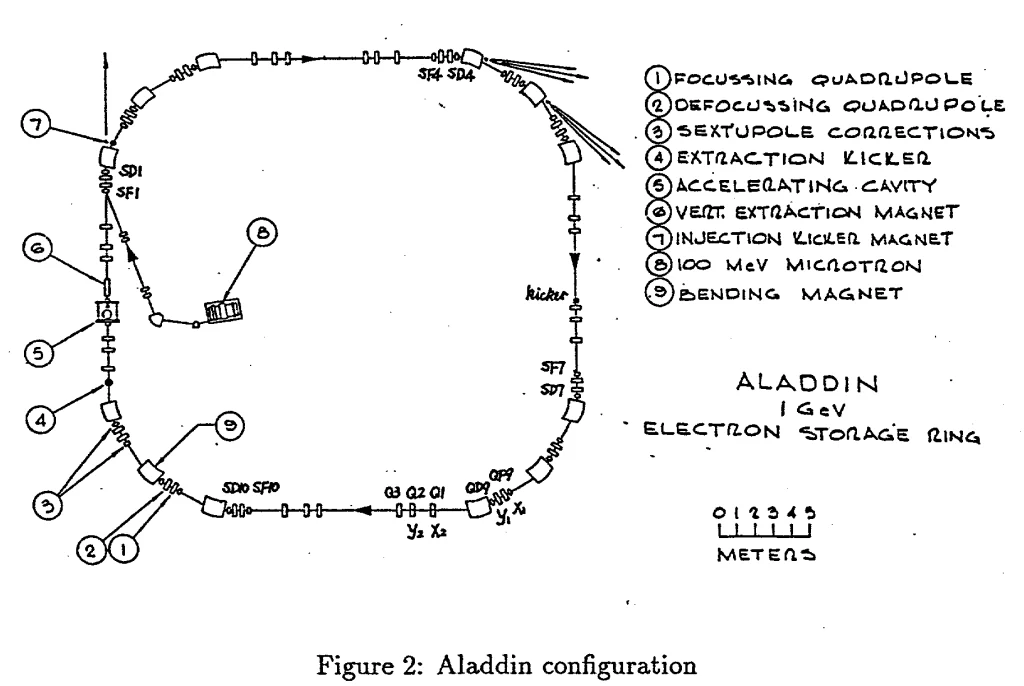
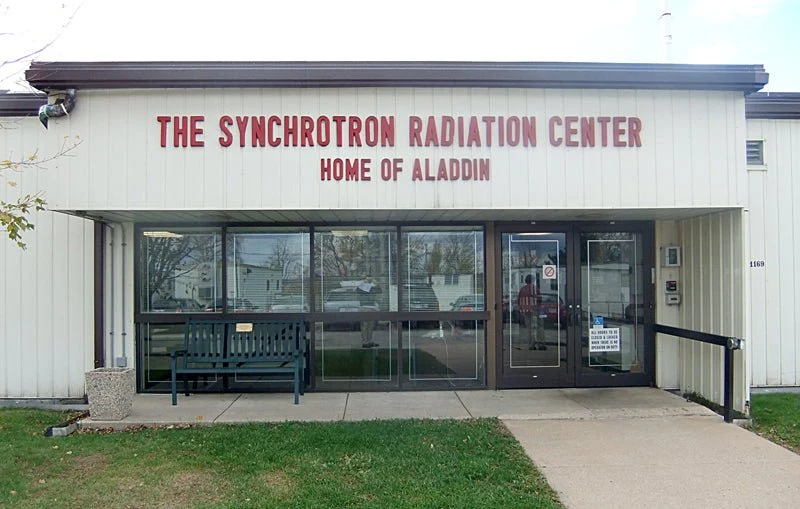
From the 1980s until 2014, this machine produced synchrotron radiation for physics experiments.
Synchrotron radiation is a type of electromagnetic radiation that is produced when charged particles, such as electrons, are accelerated to near-light speeds and then forced to change direction by a magnetic field. This phenomenon occurs within particle accelerators, where electrons are propelled through a vacuum tube and directed around a circular or elliptical track using powerful electromagnets.
As these high-energy particles bend along the accelerator’s magnetic trajectory, they emit synchrotron radiation across a broad spectrum, ranging from infrared to X-rays. The intensity and versatility of synchrotron radiation make it an invaluable tool for a wide range of scientific and medical research, enabling detailed studies of materials, biological structures, and chemical processes. By providing a powerful and highly controllable source of electromagnetic radiation, synchrotrons facilitate groundbreaking investigations into the fundamental properties of matter and the universe.
Original: $34.00
-65%$34.00
$11.90More Images










Particle Accelerator Fragment
This is a section of the cooling coils, seen here in yellow, of the beam-steering magnets of the Aladdin electron storage ring, a synchrotron particle accelerator.
From the 1980s until 2014, this machine produced synchrotron radiation for physics experiments.
Synchrotron radiation is a type of electromagnetic radiation that is produced when charged particles, such as electrons, are accelerated to near-light speeds and then forced to change direction by a magnetic field. This phenomenon occurs within particle accelerators, where electrons are propelled through a vacuum tube and directed around a circular or elliptical track using powerful electromagnets.
As these high-energy particles bend along the accelerator’s magnetic trajectory, they emit synchrotron radiation across a broad spectrum, ranging from infrared to X-rays. The intensity and versatility of synchrotron radiation make it an invaluable tool for a wide range of scientific and medical research, enabling detailed studies of materials, biological structures, and chemical processes. By providing a powerful and highly controllable source of electromagnetic radiation, synchrotrons facilitate groundbreaking investigations into the fundamental properties of matter and the universe.
Product Information
Product Information
Shipping & Returns
Shipping & Returns
Description
This is a section of the cooling coils, seen here in yellow, of the beam-steering magnets of the Aladdin electron storage ring, a synchrotron particle accelerator.
From the 1980s until 2014, this machine produced synchrotron radiation for physics experiments.
Synchrotron radiation is a type of electromagnetic radiation that is produced when charged particles, such as electrons, are accelerated to near-light speeds and then forced to change direction by a magnetic field. This phenomenon occurs within particle accelerators, where electrons are propelled through a vacuum tube and directed around a circular or elliptical track using powerful electromagnets.
As these high-energy particles bend along the accelerator’s magnetic trajectory, they emit synchrotron radiation across a broad spectrum, ranging from infrared to X-rays. The intensity and versatility of synchrotron radiation make it an invaluable tool for a wide range of scientific and medical research, enabling detailed studies of materials, biological structures, and chemical processes. By providing a powerful and highly controllable source of electromagnetic radiation, synchrotrons facilitate groundbreaking investigations into the fundamental properties of matter and the universe.